
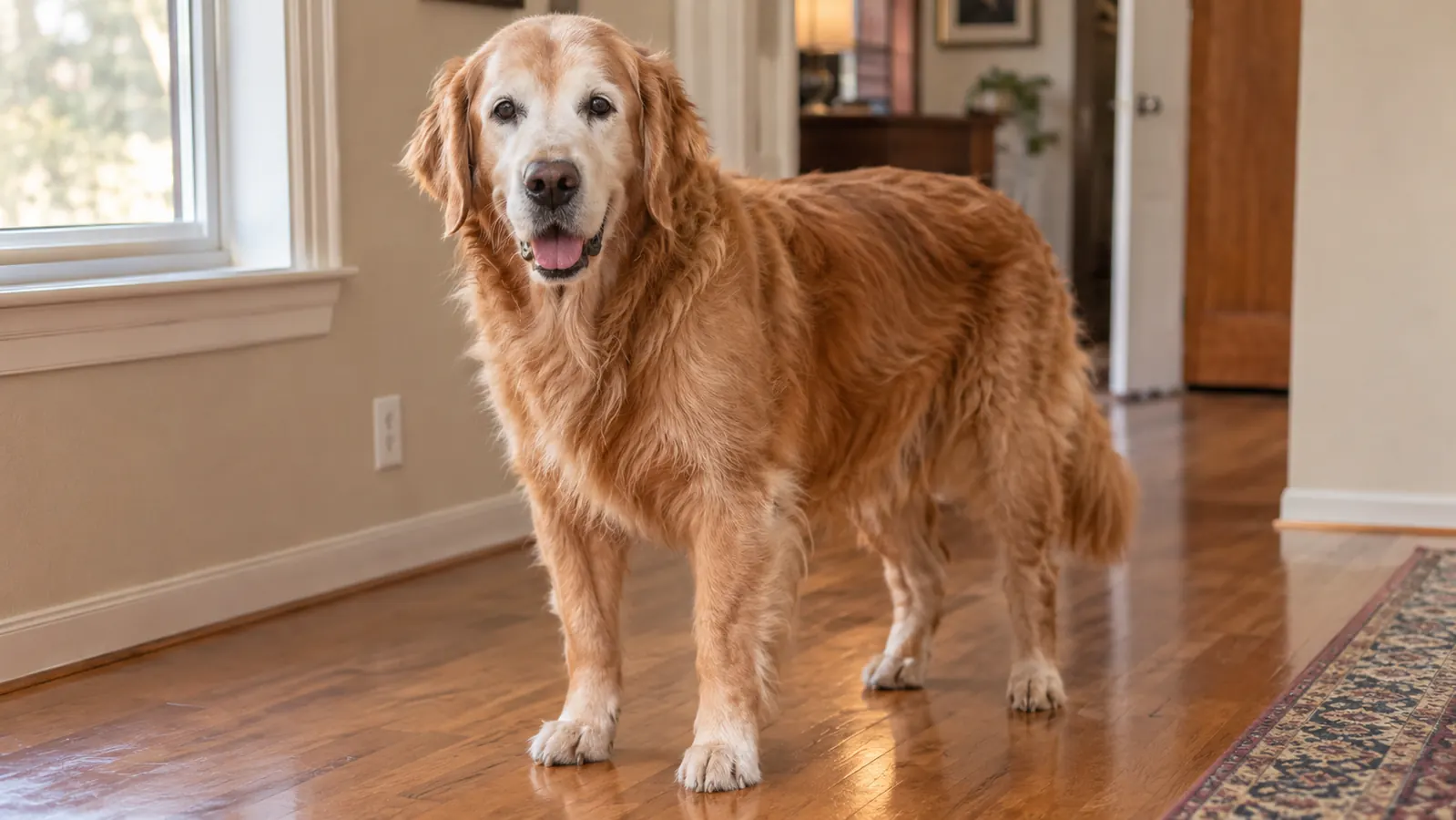
Maple turned twelve in January. In April, on a wet Monday morning, her back legs went out from under her on the oak floor in the hall. She did not yelp and she was not hurt. She just lay there with her hind feet splayed out behind her, looking up at me with an expression I did not care for. I got her up. I put a rug down by the door. Then I sat at the kitchen table with a cup going cold and thought about how many times a day that dog crosses that hall.
Here is what I already had in place. Cosequin chewables, started the first week of March at Dr. Amari's suggestion, given once each morning with breakfast in the kitchen. A Bedsure bolster bed on the carpet in the bedroom. Good things, both of them, and neither one does a single thing about the floor. A joint supplement works on the joint. It does not put tread under a seventy-four pound dog on polished oak. So the first week of May I measured her front paw against the listing chart and ordered a pack of DOK TigerToes non-slip dog socks. Four to a pack. She has worn them indoors during the day ever since, and they come off at bedtime.
I want to be straight with you about what socks do. They are not a treatment. They will not make arthritis better and they will not keep a dog from ever slipping again. What they do is put a grip surface between her pads and the oak, so when her back end swings a little wide, the foot stays where she puts it instead of skating out. That sounds small. It is the difference between a dog who walks to the water bowl and a dog who decides the kitchen is not worth the trip.
The grip that keeps holding after the sock has twisted a quarter turn
Maple wears a Large, for paws 2.5 to 2.8 inches across. Hers measured about 2.7. Measure first, then match it to the chart on the listing. Four socks to a pack, machine washable, with a hook and loop strap at the ankle.
Amazon Check Today's Price on Amazon →Step 1: Measure the Paw Instead of Guessing From the Dog
The main reason dog socks end up in a drawer is that they were bought by breed or by body weight. A seventy-four pound Lab mix and a seventy-four pound shepherd can take two different sizes. What the chart wants is the width of the paw. Put a sheet of paper on the floor, have the dog stand on it with her weight on that foot, and mark the widest point across the pads, toenails included. That last part matters. The nail is what catches on the floor, so the nail is part of the measurement.
Do the front foot and the back foot, because on an older dog they are often not the same, and order for the wider one. Maple measured about two and seven-tenths of an inch across the front. The DOK listing gives Large as two and a half to two and eight-tenths inches, so that is what I ordered, and it fit her on the first try.
If you land between two sizes, go up rather than down. A sock that is a hair loose can be snugged with the strap. A sock that is a hair tight will rub, and a dog with sore hips does not need sore toes on top of it. Write the number on the inside of a cupboard door. A year from now you will not remember it, and you will be starting over with the paper.
One more thing. Trim the nails before you measure, or measure again after you trim them. Long nails push the paw out flatter and can send you up a size you do not need. It costs nothing to check twice.
Step 2: Set the Strap Snug, Then Check It an Hour Later
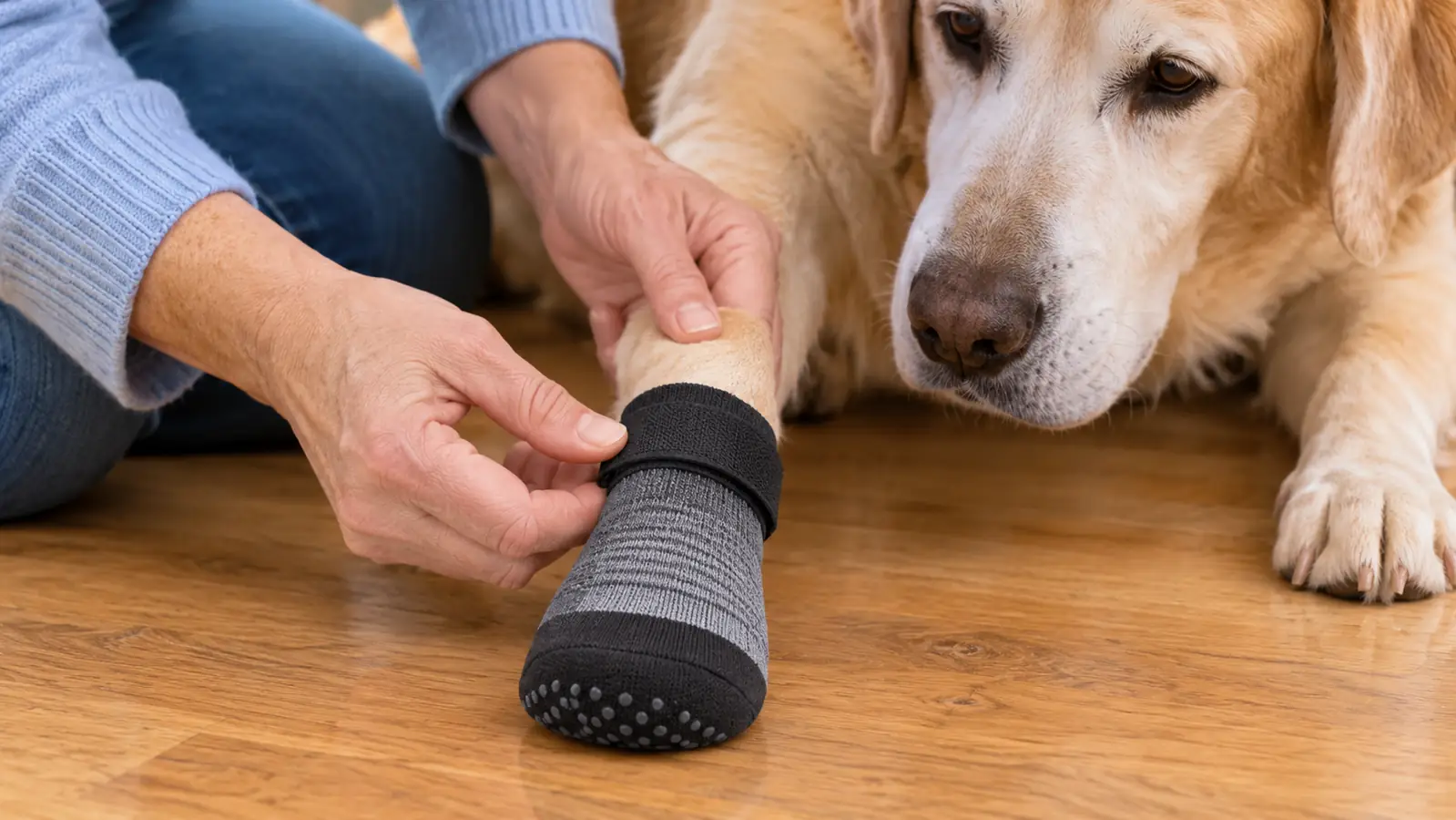
The sock pulls on over the paw and the hook and loop strap wraps at the ankle to hold it there. The strap is where people go wrong, in both directions. My test is simple. Slide one finger under the strap. If it will not go in at all, it is too tight. If two fingers slide in easily, it is too loose and that sock is coming off in the hall within the hour.
Then check after the first hour of wear. Roll the sock down and look at the leg. You want a faint mark and nothing more. A deep groove, hair rubbed thin, or a pink band around the ankle means back it off one notch. I had Maple's a little too snug the first morning and she worried at them with her mouth. I loosened both back socks and she left them alone after that.
And do not leave them on around the clock. Maple's come off at bedtime and stay off all night. Skin under a sock stays warm and damp, and eight hours of that is how a dog ends up with trouble between the toes. On during the day, off at night. That is the whole rule and I have not had a problem with it in six months.
Step 3: Put Them On With Food and Give Her a Week
Pick a morning when nobody is in a hurry. I did it on a Tuesday after breakfast, with a coffee can of kibble on the counter and the back door shut so there was nowhere to retreat to. One sock on, one piece of kibble. Second sock, another piece. She stood there as though I had put boots on her and took four high, clomping steps across the kitchen. Then she lay down and sighed at me.
That first day is a comedy and you should expect it. What you are watching for is the second and third day, when the sock stops being an event and starts being part of the morning. It took Maple about a week before she quit lifting each foot too high. She will still do it on the three wooden steps at the back door, out of habit, long after the ramp took that job over.
Do not chase her to get them on. If she walks away, let her go and try again in an hour. Fifteen seconds of cooperation is worth more than five minutes of wrestling, and a dog who learns that socks mean being cornered and held down will start hiding when she sees them in your hand. I have watched that happen with a friend's terrier. It is harder to undo than it is to avoid.
The morning she splayed out on the oak, I thought we were watching the beginning of the end of her walking. Six months of a sock on each foot later, she crosses that same hall without slowing down.
Step 4: Straighten the Twists and Look at the Paws Every Day
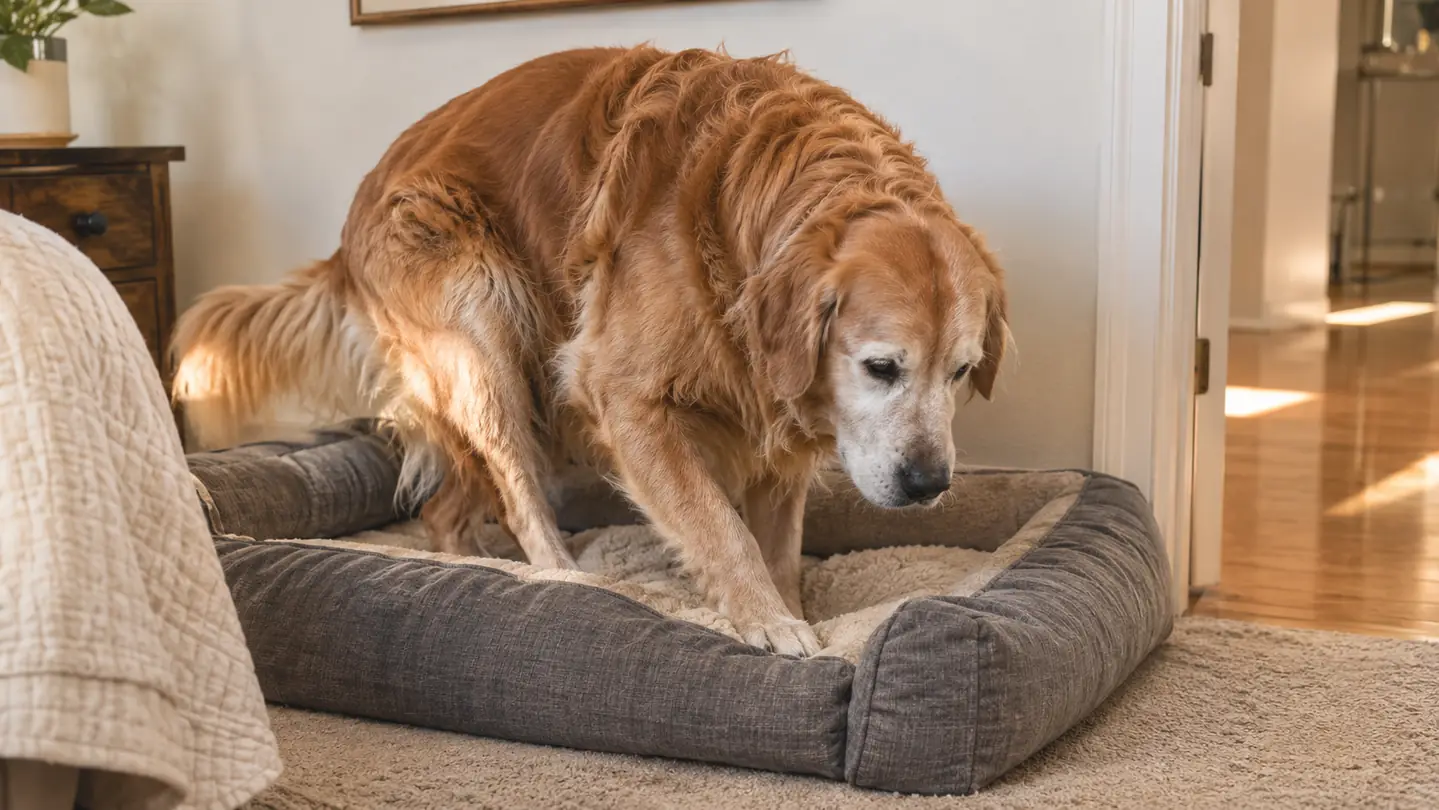
They twist. I will say that plainly, because the listing says the grip still works when the sock twists and in my experience that is honest, but working is not the same as sitting right. Maple's back socks rotate about a quarter turn by the end of a morning. When I see it, I straighten it. It takes three seconds and she stands there and waits for me to finish.
Once a day, take them off and look at the paws in good light. You are checking for redness at the toes, a rubbed spot at the heel, and anything damp or smelly between the pads. If a foot is damp, leave the socks off for the rest of the day and let it dry out. Warm and wet inside a sock is exactly what yeast wants.
Keep the hair between the pads trimmed as well. A thick tuft packed down inside a sock bunches up under the paw and does the same thing a small stone does. The socks are doing the work of tread. They cannot do the work of a grooming clipper too.
Step 5: Wash Them Often and Know When They Come Off
The socks are machine washable, which matters more than it sounds, because anything worn on feet that still go out to the yard gets grim inside a week. I wash Maple's with the regular laundry and let them air dry. Four socks in a pack means two on the dog and two in the wash, and that is the main argument for buying the four pack for a single dog rather than one pair.
Take them off for wet grass, for the yard in the rain, and any time she is going to lie down for a long stretch. These are indoor grip socks for hardwood and tile. The DOK listing does not call them boots and neither will I. If you need something for ice and salt, that is a different product and a different conversation.
And if she starts chewing at them, that is information, not misbehavior. Either something is rubbing and the strap needs a notch, or she has had enough for the day. Take them off, look at the leg, and try again tomorrow. In six months I have had two days like that and neither turned into a problem.
What Else Helps
Socks were the piece that mattered most on the oak, but they were not the only piece. I put two runners down along the path she takes from the bedroom, through the hall, and into the kitchen. Not wall to wall, just the route she actually walks. A dog will use a path. She will not go out of her way to find a rug in the corner. If your floors are anything like mine, watch her for a day and mark where she turns. That is where the rug goes.
The rest of what we use does different jobs and I would not want any of it confused with the socks. The Cosequin is the daily joint supplement, and the change I noticed was modest and slow, easier rising in the mornings around six weeks in, with stiff days still in the mix. The bolster bed on the carpet gives her a soft place to land instead of the floor. The LOOBANI sling comes out under her belly on the stiff days, and the ramp handles the three steps out back and the hatch of the Outback. None of those is a sock. The sock is the only thing standing between her pads and the oak.
Two more housekeeping items. Keep the nails short, because a long nail slides on oak no matter what is on the paw. And if your dog has not been examined, get the diagnosis before you buy anything at all. Maple's arthritis, both hips and the left elbow, was confirmed by Dr. Amari in February. I am a retired nurse, not a veterinarian, and I cannot tell you what is going on in your dog's joints. I can only tell you what I saw in my own kitchen and what helped.
Four socks, six months of daily wear, one hallway she crosses without hesitating
Size Large fits paws 2.5 to 2.8 inches across, measured standing with the nails included. Machine washable, hook and loop strap at the ankle, and grip that still bites after the sock has rotated. Measure once and check the chart on the listing before you order.
Amazon Check Today's Price on Amazon →